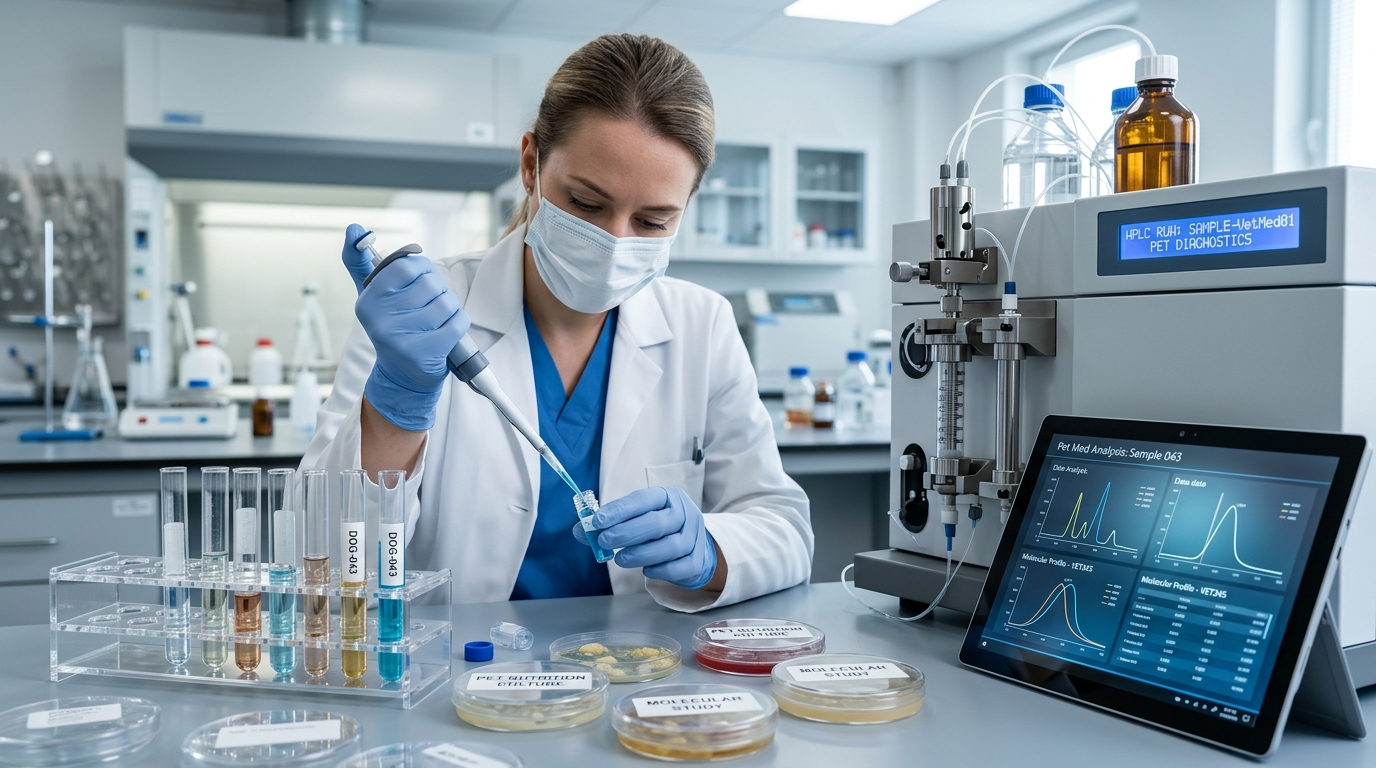
Paws & Tails Bioscience Laboratory conducts randomized double-blind clinical trials, multi-omics gut sequencing, and bioactive nutrient bioassays for veterinary pharmaceuticals and companion animal health.
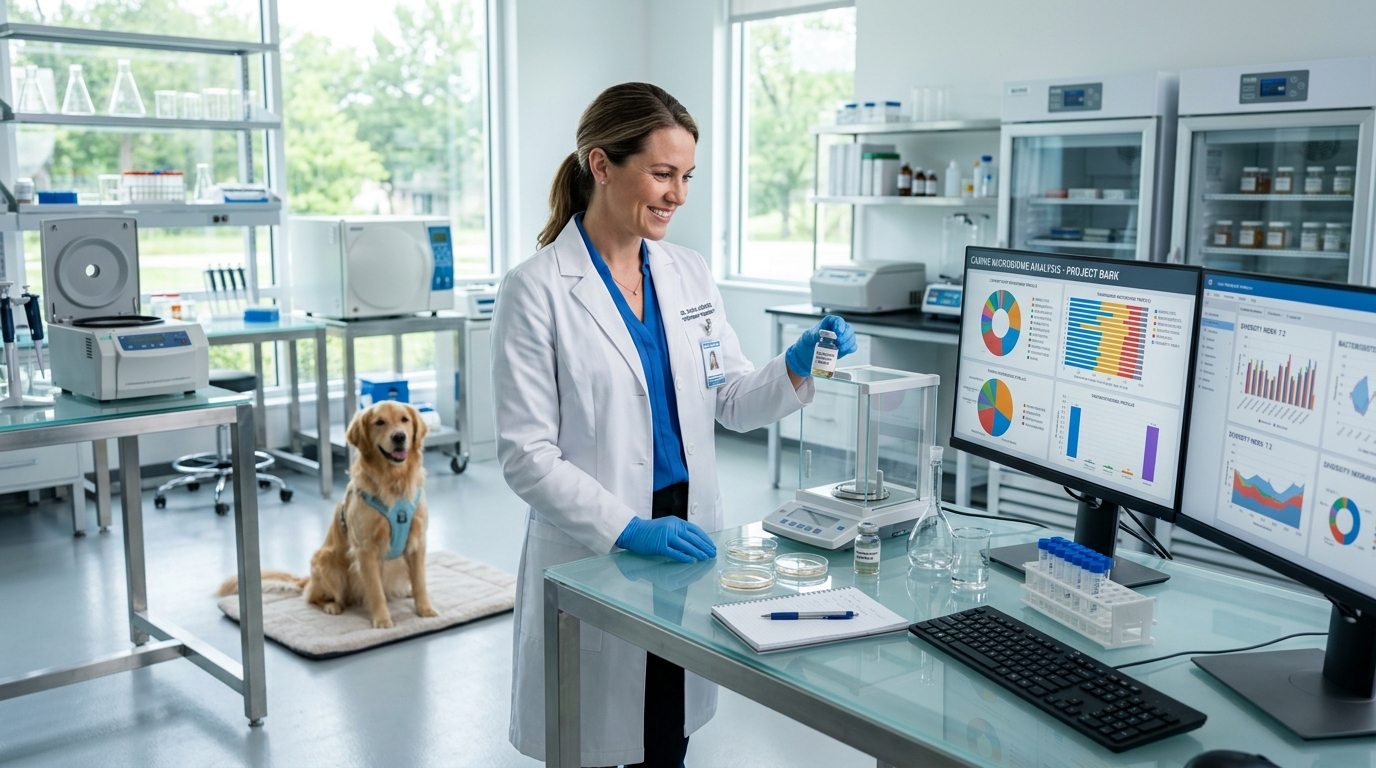
Current investigational veterinary therapeutics under randomized multi-center evaluation.
Evaluating symbiotic postbiotic peptide complexes in resolving idiopathic canine inflammatory bowel conditions.
Targeted low-molecular weight peptide formulations supporting nephron integrity in geriatric feline cohorts.
Assessing NAD+ precursor bioavailability and telomere attrition slowing in large-breed senior canines.
Enzymatic hydrolysis optimization for eliminating IgE-mediated dermatological reactions in felines.
Our state-of-the-art laboratory utilizes next-generation sequencing (NGS), LC-MS/MS mass spectrometry, and automated microfluidics to deliver clinical-grade biological assays.
Full 16S rRNA gene profiling and shotgun metagenomic sequencing of companion animal intestinal microbiomes.
Quantifying picomolar concentrations of bioactive peptide metabolites and short-chain fatty acids (SCFAs).
Simulating gastrointestinal transit kinetics to guarantee stability through canine gastric acid.
Published clinical trials, bioavailability studies, and whitepapers from Paws & Tails Laboratory.
A multi-center randomized controlled trial demonstrating significant elevation in Faecalibacterium prausnitzii and acetate production following targeted daily supplementation.
Pharmacokinetic investigation confirming 94.2% intact peptide absorption across the intestinal barrier without provoking allergen-specific IgE degranulation.
Evaluation of synergistic polyphenol-peptide co-factors on mitochondrial respiration and telomere maintenance in large-breed working dogs.
Shotgun sequencing reveals profound shifts in Bacteroidetes/Firmicutes ratios, highlighting novel biomarkers for subclinical intestinal permeability.
In-vitro articular cartilage tissue explants demonstrate a 3.4-fold increase in type II collagen synthesis following low-dalton peptide exposure.
Prospective 24-week clinical cohort study assessing SDMA serum levels and urinary protein-to-creatinine ratios in geriatric cats.
Investigating the gut-brain axis in working dogs: butyrate signaling pathways correlating with enhanced visual focus and trainability metrics.
Calculate recommended therapeutic bioavailability curves and daily bioactive peptide concentrations calibrated to companion animal metabolic body weight ($BW^{0.75}$).
Our multidisciplinary team brings together clinical veterinarians, molecular biochemists, and bioinformaticians with over 60 published peer-reviewed papers.
We collaborate with accredited veterinary clinics, university research faculties, and pet health innovators globally for clinical trials and sample batch testing.
research@pawsandtailslab.org